
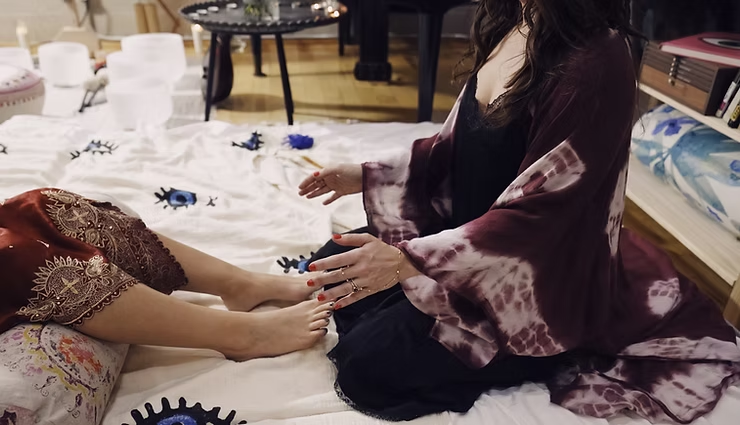
“I just want to feel peaceful in my own body.”
That’s what Sarah told us during her first consultation. She’s a therapist in Santa Monica—brilliant at her work, dedicated to her clients, always the first person everyone calls when they need support. But somewhere along the way, she realized she didn’t know what she needed anymore. Just that there was something more.
Here’s the pattern we’ve discovered working with hundreds of professionals across Los Angeles: the very quality that makes you exceptional at your work—your ability to sense and respond to what others need—can actually be trained to work for you instead of depleting you.
As one client who’s been working with us for three years put it: “The biggest lesson I learned is that personal development and growth don’t have to be painful.”
Maybe you’re thinking, “I’m not usually into this kind of thing.” That’s what most people say before they try Reiki energy healing. Even a licensed clinical mental health therapist with over two decades of experience told us after her first session: “I walked away feeling both wiser and calmer while also more present and uplifted.”
This guide will show you what Reiki actually is, what the research reveals, and most importantly—what it feels like when you finally learn to work with your energy instead of against it.
What Is Reiki Energy Healing?
Reiki energy healing combines “rei” (universal) and “ki” (life force energy)—it’s a Japanese practice that helps you work with the subtle energy patterns in your body. This becomes especially relevant when you’re constantly attuned to everyone else’s emotional states.
What happens during a Reiki session:
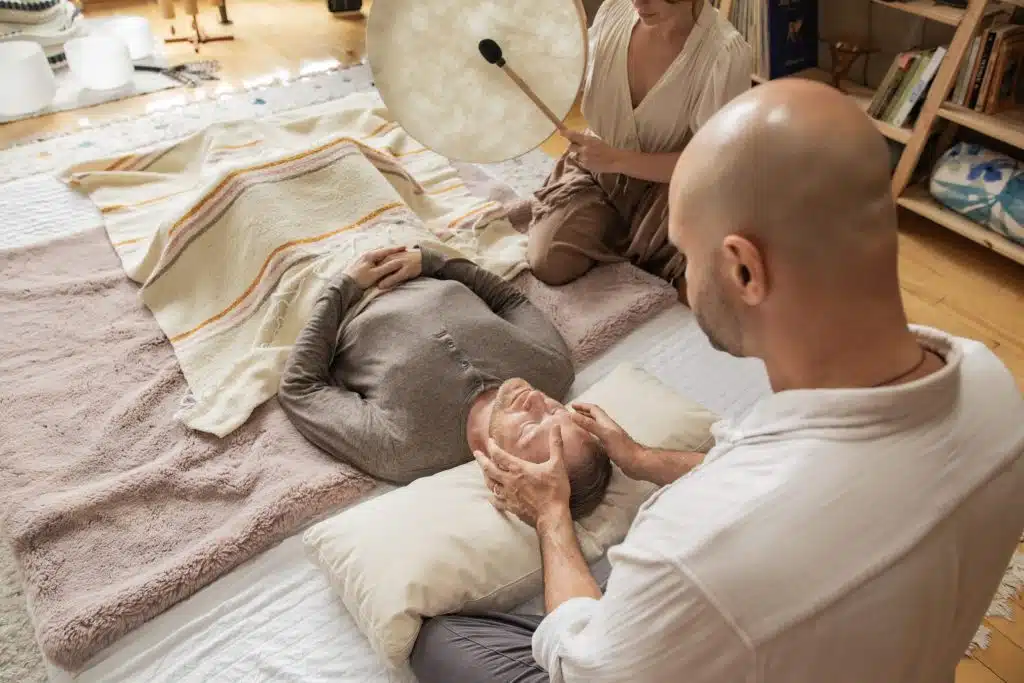
- A trained practitioner places their hands lightly on or above your body
- Sessions typically last 60-90 minutes
- You remain fully clothed and lie comfortably on a massage table
- Most people report feeling warmth, tingling, or deep relaxation
What Reiki addresses:
- Chronic stress and tension stored in your body
- Difficulty “turning off” after work
- Emotional overwhelm from absorbing others’ feelings
- Sleep disruption and mental restlessness
Research from hospitals like NewYork-Presbyterian shows that Reiki helps with stress reduction and emotional regulation. It’s used as a complementary practice alongside traditional therapy—not as a replacement for medical treatment.
In This Guide:
- What Research Actually Shows About Reiki
- What Reiki Energy Feels Like (Real Experiences)
- The Five Core Principles of Reiki Practice
- Your First Reiki Session: What to Expect
- How Reiki Training Works (And Why It Matters)
- Who Benefits Most From Reiki
- Getting Started in Los Angeles
The Research Behind Reiki Energy Healing (What Science Actually Shows)
“I’m not usually into this kind of thing, but…”
If that’s what you’re thinking right now, you’re in good company. Most of our clients are educated, analytical professionals who wanted to see what the actual evidence says before trying anything new.
What Hospitals and Research Institutions Have Discovered
Here’s something that might surprise you: over 800 hospitals in the United States now offer Reiki services. Not alternative wellness centers or boutique spas—major medical institutions.
NewYork-Presbyterian uses Reiki in their Addiction Recovery Unit. Cleveland Clinic discusses it on their website. These aren’t places that jump on trends without looking at the data.
So what does the research actually show?
A 2024 systematic review looked at five studies with cancer patients receiving Reiki. The results showed significant reduction in fatigue, pain, and stress. Quality of life improved. And here’s what stood out: no side effects were reported in any of the studies.
Another 2024 controlled trial worked with 42 people dealing with knee osteoarthritis. After Reiki sessions, they reported lower pain scores and higher wellbeing across multiple measures—less sadness, better cognitive awareness, improved mood, less spiritual disruption.
As one mental health therapist with over two decades of experience told us after her first session: “It was profoundly nurturing as well as professional and poignant.”
Why Smart, Skeptical People Find It Works
Let’s be honest about something: the mechanism here isn’t about whether you “believe” in energy. It’s about physiological response. Your nervous system doesn’t care if you’re skeptical—it responds to what’s happening in the moment.
Think about it like massage. You don’t need to believe in the theory behind massage for your muscles to relax when someone works on a knot in your shoulder. Same principle applies here.
The research focuses on what’s measurable: stress reduction, anxiety levels, emotional regulation. These are things that show up in studies, not just in people’s subjective experience (though that matters too).
Here’s the interesting pattern we’ve noticed: Reiki tends to be most effective for people who overthink everything. If that’s you, your analytical mind actually becomes an asset. You can observe what’s happening in your body without getting caught up in whether it “should” work or not.
One hospital staff member described their patient experience this way: “Many of our patients come in malnourished, fearful, hopeless, and in severe physical, spiritual and mental pain. Reiki has proven helpful in dealing with these issues for each patient in their own way.”
That’s the thing about working in legitimate medical settings—you can’t rely on placebo effect alone. People are coming in with real, measurable symptoms. And something’s shifting.
What Reiki Energy Actually Feels Like (From People Who’ve Experienced It)
One client described it as “my energy was made of champagne bubbles.” Another said she felt “grounded, open and connected.”
The truth is, Reiki feels different for everyone—and that’s actually part of how it works.
The Physical Sensations People Report
Many people report warmth, tingling, or deep relaxation during sessions. Some don’t feel anything particularly dramatic but notice they’re breathing deeper than they have in months.
There’s this principle that energy follows attention—wherever the practitioner places their hands, something tends to shift.
One client told us: “I was amazed to feel like I was able to take deeper breaths after going through this process. My lungs felt more open and ‘cleaner,’ even though I hadn’t been sick or anything like that.”
He’d been carrying a lot in his chest after a turbulent weekend with family. During the session, we talked about where in his body he was storing those feelings. Yonatan performed Reiki and brought attention to these areas that felt saturated with negative emotions. The physical release was immediate—tension he’d been holding in his shoulders, neck, and jaw just… loosened.
This isn’t your imagination playing tricks on you. It’s physiological. When your parasympathetic nervous system activates—your rest-and-digest mode—your body starts to actually process what it’s been storing.
And everyone’s experience is unique and completely valid. There’s no “right” way to feel Reiki.
The Emotional Experience (Why Some People Cry)
Emotional release during Reiki is common and completely normal. It’s not about “being emotional”—it’s stored stress finally having permission to leave your body.
Patients often experience warm feelings, become tearful, feel more secure and peaceful. Some even fall asleep right on the table. All of this is fine. The session creates a safe container for whatever needs to process.
One client shared: “There is so much thoughtfulness and care given in a single session. Yonatan was able to guide me through many dimensions of myself that left me feeling grounded, open and connected.”
Another came to us after a year of intense grief. She told us: “I realized the only way through is by going deep within myself.” The sessions combined breathwork, movement, coaching, and Reiki—giving her multiple ways to access what she was carrying.
What we’re really talking about here is somatic release. Your body holds onto things your mind has already processed. Or thinks it’s processed. The crying, the shaking, the sudden wave of emotion—that’s not weakness. That’s your system finally completing a cycle it started months or even years ago.
You get to choose how much you engage with that. The practitioners create space, but you’re always in control of how deep you want to go.
What Happens in the Hours and Days After
Most people sleep better that night. Like, actually sleep—not that fitful half-awake thing you’ve been doing.
Some feel “spacey” or deeply relaxed for a few hours after. Others report feeling lighter, more present with their loved ones. One client told us: “Even a few days later, I was still feeling more joy and compassion from the session.”
The effects tend to compound with multiple sessions. Your system starts to remember what regulation feels like.
Another client shared: “I left feeling deeply relaxed and like my energy was made of champagne bubbles, which felt both good and surprising considering I came into the session feeling stressed and upset.”
The integration period matters. Your body and mind are processing what shifted during the session. Sometimes insights come later—in the shower, driving home, lying in bed that night. You’ll suddenly understand something about yourself that’s been just out of reach.
The Five Core Principles That Guide Reiki Practice
Here’s what most people don’t realize: Reiki isn’t just about the hands-on healing. The practice is built on five principles that were added by founder Mikao Usui to bring spiritual balance to the technique.
And they sound a lot like what modern psychology now recommends for mental health.
The Daily Intentions (Not Rules—Invitations)
The five principles came from the Meiji emperor of Japan. Usui added them to help people realize that healing the spirit by consciously deciding to improve oneself is a necessary part of the Reiki healing experience.
These aren’t commandments. They’re more like mindfulness prompts—gentle invitations to shift your patterns.
Just for today, I will not worry
Modern translation: What if you could redirect that mental energy?
Just for today, I will not anger
Modern translation: What if you could observe emotions without being consumed by them?
Just for today, I will be grateful
Modern translation: What if you noticed what’s already working?
Just for today, I will work honestly
Modern translation: What if you showed up authentically?
Just for today, I will be kind
Modern translation: What if you extended that kindness inward too?
The “just for today” framing makes them manageable. You’re not signing up for a lifetime commitment to never worry again. You’re just experimenting with what it feels like to set that intention for the next 24 hours.
It’s ancient wisdom meeting modern neuroscience—and somehow, it still works.
How These Principles Show Up in Modern Los Angeles Reiki Practice
These principles aren’t religious, though they do align with many spiritual traditions. At Word of Mouth, we integrate them as reflection prompts rather than rules you have to follow.
The practical application shows up in daily life. Maybe you notice yourself worrying about a meeting next week, and you remember: just for today, what if I didn’t? Not forever. Not even tomorrow. Just today.
This becomes the foundation for self-Reiki practice too.
One longtime client told us: “The biggest lessons I have learned are that play and joy can be the foundation that supports us through the hard stuff, that personal development and growth don’t have to be painful, and that I am supported in this journey called life in ways I can’t even see or understand.”
Another shared: “I am finally having conversations with myself that are loving. I don’t know how I survived so long without feeling love for myself.”
That shift—from self-criticism to self-kindness—often starts with these simple daily intentions.
Why This Matters for Your Experience
Here’s the thing: for Reiki to have lasting results, you can’t just be a passive recipient. The client needs to accept responsibility for their healing and take an active part in it.
Reiki gives you tools, but you’re not just lying there hoping someone fixes you. This is a partnership model, not a dependency model.
That’s why the training exists—so you can learn self-Reiki practices and become your own walking sanctuary.
As one client put it: “Her basis of her work is to understand where I am and where I want to go and then guide me as I work to achieve my goals.”
The principles give you a framework for that journey. They’re not about perfection. They’re about direction.
What Actually Happens During Your First Reiki Session
“I had never done exercise as a complement to emotional therapy—that worked really well for me and it was cool to feel strong, warmed up and grounded in my body before tackling some bigger emotional issues.”
That’s what makes sessions at Word of Mouth different. They’re designed around your whole experience, not just the energy work.
The Integrative Approach (Los Angeles Style)
Sessions can include breathwork, movement, coaching conversation, and Reiki energy healing. Standard Reiki sessions typically last 60-90 minutes, but at Word of Mouth, everything’s tailored to what you need that day.
This isn’t a cookie-cutter approach where everyone gets the same treatment.
One client described it this way: “I booked an Integrative Wellness Session with Yonatan and was excited that it covered so many modalities in one visit. The session consisted of breath work, Pilates, therapeutic coaching, and Reiki. Every aspect felt grounding and Yonatan was so reassuring and was such a great guide especially as it was my first time experiencing Reiki.”
Another client who’d spent a lot of time in traditional therapy appreciated the combination: “As someone who has spent a lot of time in traditional therapy, I appreciate that the arc of each session involves a talking/coaching component in addition to breathwork, healing movement, and Reiki.”
The integrative wellness model works because different modalities access different parts of your experience. Sometimes you need to move your body first to feel safe enough to process what’s stored there. Sometimes talking helps you understand what you’re about to release. Sometimes you just need to lie down and receive.
The customization happens based on what you’re bringing into the room that day—and what your system is ready to work with.
The Physical Setup (What to Actually Expect)
You remain fully clothed during the session. You’ll lie on a massage table, though you can sit in a chair if that feels better for your body.
You get to choose how the practitioner works with you: hands-on, light touch, or hands hovering just above your body. All of these are valid approaches. It’s about what feels right for you.
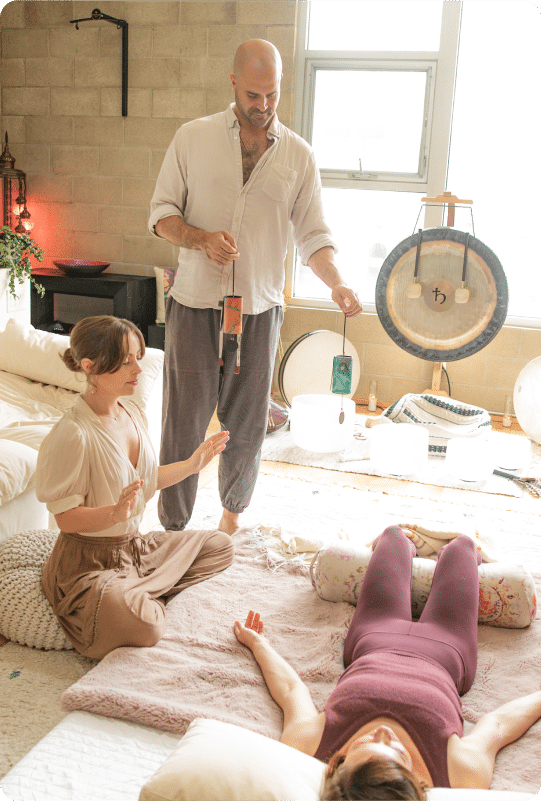
The space itself matters. Word of Mouth’s loft is designed for calm—not clinical, not overly “spa-like,” just… peaceful.
Clients consistently mention this: “The space is immaculate. It’s beautiful, clean, and so peaceful. I feel my body relaxing just by being there.”
Another said: “Just walking in to Word of Mouth you can feel the calm, healing energy immediately. The space is thoughtfully curated for a healing experience.”
And: “You walk in and you are immediately greeted with a gentle warmth and sincere kindness.”
The lighting, the music, the temperature—all of it’s considered. And if something doesn’t feel right, you can say so. Want it quieter? Warmer? More or less light? This is your session.
During the Session (The Actual Experience)
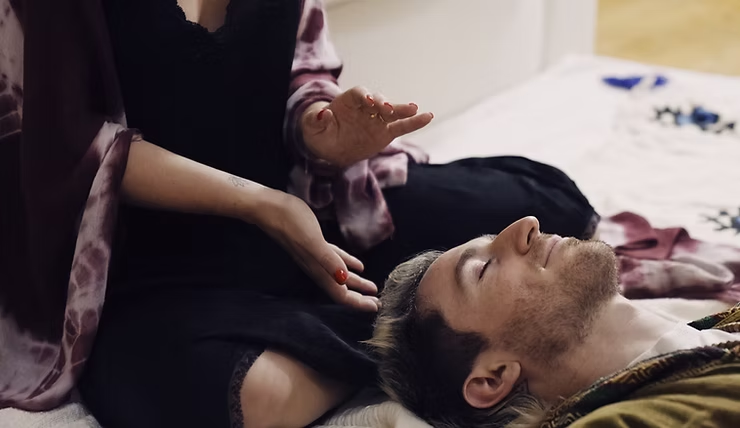
The practitioner places their hands in specific positions on or above your body. They decide how long to hold each position based on the energy flow they’re perceiving through their hands.
You might feel warmth. Tingling. You might see colors behind your closed eyelids. Or you might simply relax deeply, like the best nap you’ve had in years.
Some people fall asleep during sessions. That’s completely fine. Your system is still processing even when your conscious mind checks out.
There’s no “right” way to experience Reiki energy healing.
One client shared: “Yonatan has a calm, welcoming demeanor making the whole experience comfortable and relaxing. The Pilates work was restorative and perfectly targeted to my trouble areas. The Reiki session was profound inner healing with added sound healing.”
Another appreciated the agency built into the experience: “Very therapeutic sound healing from two very skilled artists. I really enjoyed all the invitations Jaime gave to follow her voice in the meditation journey or not and also to stay still or to move and stretch. I think giving this kind of freedom and agency to recipients of sound healing feels very safe and empowering.”
The practitioner is sensing where energy feels stuck or needs attention. You’re noticing what’s happening in your body. Neither of you is forcing anything—you’re both paying attention and allowing.
The Conversation Component (What Makes It Therapeutic)
This isn’t just silent energy work where you lie there wondering what’s happening. There’s space for processing, for talking through what you’re noticing, for making connections between what you feel in your body and what’s going on in your life.
The practitioners help you identify where you’re holding tension or emotion. The integration piece is key—understanding what shifted and why, so you can recognize these patterns on your own later.
The coaching element supports lasting change. It’s one thing to feel better after a session. It’s another thing to understand what happened well enough that you can start to shift these patterns yourself.
One client described it: “In the talk therapy portion where we got into some sticky feelings I was working through, then we talked about where in my body I was storing those feelings. We did some visualization of the feelings.”
Another shared: “His words of wisdom regarding some of my personal challenges very much resonated with me and helped me reframe some stuck thinking in these areas.”
That’s the difference between just receiving treatment and actually learning something you can use.
How Reiki Training Works (And Why Learning It Changes Everything)
“Despite my ignorance of the practice, I jumped in and did Reiki Level 1 training in March of 2024. The sessions were exceedingly enlightening and I learned a great deal. I did Reiki Level 2 training in August of 2024 and my education and spiritual growth has been remarkable.”
Here’s what most people don’t realize: Reiki energy healing isn’t something you can only receive. It’s something you can learn to do for yourself.
The Attunement Process (What Makes You a Practitioner)
The ability to use Reiki isn’t taught in the usual sense—it’s transferred to you during a class. This happens through something called an “attunement,” which is given by a Reiki master.
The attunement allows you to tap into an unlimited supply of “life force energy” to improve your health and enhance your quality of life. And here’s the interesting part: it’s not dependent on your intellectual capacity or spiritual development. It’s available to everyone.
This is experiential learning, not intellectual learning. You don’t memorize theories and take a test. You receive something that shifts how your own energy system works.
One client described her experience: “I recently completed my Reiki Level 1 certification with Jaime and Yonatan at Word of Mouth, and it was an incredibly profound experience. Over two magical Sundays, I had the honor of learning from these luminous teachers in their beautiful home sanctuary, which provided the perfect setting for a deep dive into Reiki.”
People often worry: “Am I sensitive enough for this?” or “Do I need to be spiritual?” or “What if I don’t feel anything?”
The answer is: you don’t need to be anything other than willing to show up and try. Some people feel dramatic shifts during attunement. Others notice subtle changes over the following days and weeks. Both experiences are normal and valid.
What You Learn in Reiki Level 1 Training
The training covers self-Reiki hand positions—where to place your hands on your own body to support your energy system. You learn the five principles and how to integrate them into your daily life. You develop energy sensitivity and awareness.
You also learn how to create boundaries energetically. This part is huge for people who absorb everyone else’s stuff without realizing it. Understanding how to work with your own energy first changes everything.
The training typically happens over two days—usually Sundays—which gives you time to practice and process between sessions.
One client shared: “The entire experience has been a gift, allowing me the space to truly connect with myself and embrace the stillness and presence of unconditional love. I am deeply grateful for Jaime and Yonatan’s gracious hospitality, impeccable integrity, and for guiding us to understand that we can be our own walking sanctuary.”
Another client in substance abuse recovery talked about how the training was tailored to meet him where he was: “In both trainings, Jaime tailored the sessions to accommodate my background, especially my substance abuse, and ensure I received education which was optimally beneficial. Reiki is now an important aspect of my spiritual practice.”
The curriculum covers what you need to know, but it’s not rigid. There’s space for questions, for individual concerns, for going deeper into whatever your system needs to explore.
Between the two training days, you practice. You notice things. You bring those observations back to the second session and build on them.
Why LA Professionals Are Learning Reiki (The Practical Benefits)
This becomes a self-regulation tool you can use anywhere. No equipment needed—just your hands and your intention.
It’s particularly valuable for empaths and helpers. People whose work requires them to be attuned to others’ emotions all day. Having a practice that lets you clear your own energy system changes the whole game.
The practice builds on itself too. Level 2 adds distance healing and introduces the Reiki symbols, which give you more tools to work with. But even Level 1 gives you a sustainable self-care practice that actually works.
You can also use it on family, friends, or clients (with their permission). One client told us: “She suggested I explore Reiki to understand and manage my personal energy and the energy around me.”
The recovery client we mentioned earlier said: “I wanted to improve my recovery from substance abuse and have tools which I can use in my own recovery and the recovery of others.”
Another client connected it to spiritual growth: “I started using her to assist me in grasping the nature of my Higher Power, how to listen to my Higher Power and how to harness the energy from my Higher Power.”
There’s a difference between receiving sessions and learning the practice yourself. Both are valuable. But when you learn it, you’re not dependent on booking appointments or finding time in your schedule. You have the tools with you all the time.
And for helpers specifically—therapists, nurses, teachers, social workers—having your own practice means you can continue doing your important work without burning out in the process.
The Word of Mouth Training Experience
The training happens in intimate group settings. This isn’t one of those mass certifications where 50 people sit in a hotel conference room. Small cohorts mean personalized attention.
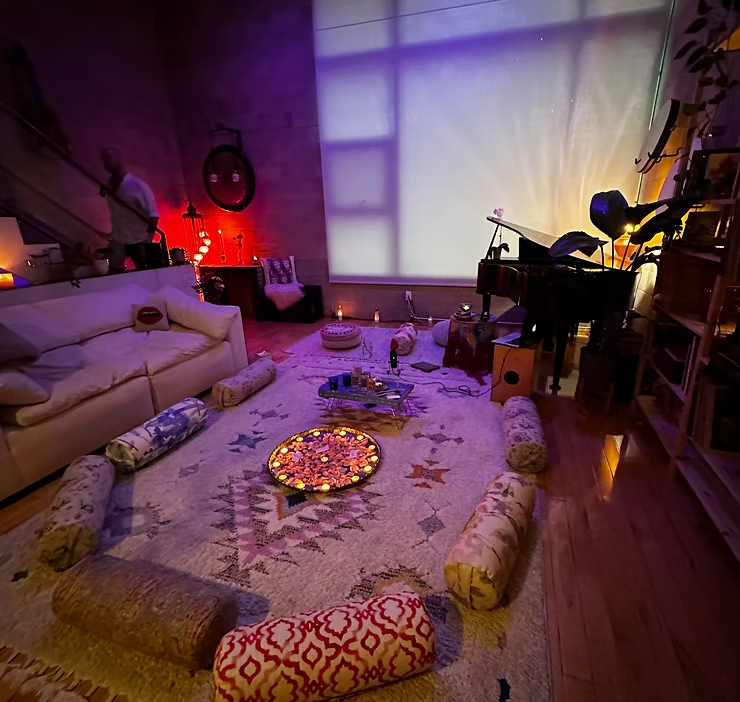
It’s held in Jaime and Yonatan’s beautiful LA sanctuary space—their actual home. There’s something about learning in a space that’s lived-in and loved that makes the whole experience feel more authentic.
The training integrates multiple modalities. You’re not just learning hand positions—you’re learning how this practice fits into a broader approach to wellness.
And there’s ongoing support after training. You’re not cut loose after the two days. The relationship continues.
One thing that stands out about Jaime: she went through Reiki Master training twice. Not because she failed the first time, but because she loves the depth of this practice that much. That level of dedication shows up in how she teaches.
One graduate said: “If you’re considering learning Reiki, I wholeheartedly recommend Word of Mouth. The experience has been nothing short of life-changing.”
Another added: “I’m looking forward to continuing my journey with Reiki Level 2 training.”
That’s the pattern we see—people complete Level 1, practice for a few months, and then they’re ready to go deeper with Level 2. Not because they have to, but because they want to.
Who Benefits Most From Reiki Energy Healing (And Why It Works for Skeptics)
“I’m one of those people who tends to be in their heads all the time, so when I first learned about energy work and Reiki, I was skeptical. However, I’ve now done two sessions of energy healing with Jaime and I just have to say — wow.”
If you’re reading this thinking “this sounds interesting but I’m not sure it’s for me,” you’re exactly the person it works best for.
The Overwhelmed Helper (Therapists, Nurses, Teachers, HR Professionals)
Your job requires emotional attunement. You’ve probably gotten really good at sensing what others need before they even say it. That’s your superpower—and your Achilles heel.
Because people who absorb others’ stress without realizing it eventually hit a wall. You give all day at work and have nothing left for yourself. And Los Angeles has this particularly intense pattern: high-achieving empaths burning out while still maintaining the appearance that everything’s fine.
One mental health therapist with over two decades of experience told us: “As a licensed clinical mental health therapist as well as a Reiki practitioner for over two decades, I must say that my experience with Jamie was profoundly nurturing as well as professional and poignant.”
She’s now referring her own clients to Word of Mouth as part of their healing journey.
Another professional working in a hospital setting described their patient experience: “Many of our patients come into the hospital with a history of medical problems. They are malnourished, fearful, hopeless, and can be in severe physical, spiritual and mental pain. Reiki has proven helpful in dealing with these issues for each patient in their own way.”
This is the professional burnout epidemic nobody’s really talking about. Compassion fatigue is real. And traditional self-care advice—bubble baths, boundary setting, saying no more often—only goes so far when the actual issue is that your nervous system has forgotten how to regulate itself.
Helpers need help too. That’s not a failure. That’s just physics. You can’t pour from an empty cup, and all that.
People Going Through Major Life Transitions
Breakups. Career changes. Grief and loss. Recovery from substance abuse or trauma. Any kind of life upheaval that requires more support than your usual coping mechanisms can provide.
One client told us: “Word of Mouth was a lifesaver after my breakup. Their unique mix of body movement, talk therapy, and energy work really helped me. The physical exercises released so much stress, while the coaching provided a safe space to unload. The energy work brought a surprising calmness.”
Another came to us after a year of intense grief: “I am coming off a year of intense grief and realized the only way thru is by going deep within myself.”
Someone else started working with Jaime in January 2024 during recovery: “I started working with Jaime in January of 2024 and her impact on my life since then has been truly profound. I told Jaime I wanted to improve my recovery from substance abuse and have tools which I can use in my own recovery and the recovery of others.”
This is about those moments when traditional therapy isn’t quite enough. Not because therapy doesn’t work—it does. But sometimes you need somatic approaches for transitions. Your body is holding things your mind has already talked through a hundred times.
Adding energy work helps because it meets you where the processing is actually stuck—in your tissues, your nervous system, your energy field.
The “Too Logical” Crowd (And Why That’s Actually Perfect)
Analytical minds often respond really well to Reiki because you can observe the process without getting tangled up in it. You notice: “Huh, my breathing just deepened.” “My shoulders dropped.” “That tension in my jaw released.”
You don’t need to “believe” in energy for your nervous system to respond. It either works or it doesn’t, and you’ll know pretty quickly.
Many of our clients are mental health professionals, medical workers, researchers—trained skeptics. The question isn’t “do you believe in energy?” The question is “are you willing to try something different and see what happens?”
Here’s something interesting: overthinking actually makes you more sensitive to energy shifts. Your awareness is already hyper-tuned. You’re just learning to direct it inward instead of only outward.
One client admitted the fear: “I’m afraid I’m too logical for this to work.”
But after trying it: “And my god, the Reiki — I can actually feel what Jaime is doing in session and it puts my mind and body in a whole other plane, a deeply relaxed liminal space.”
Another came in after a turbulent weekend with family issues: “I had just had a turbulent weekend with some family issues and I came here about mid-week to try this curated experience that combines exercise, breath work, some talk therapy, energy work and a sound bath. I was surprised how much it affected me, especially in this tough moment I was going through.”
Why is skepticism healthy? Because it means you’re not going to accept vague promises or fluffy explanations. You want to know what actually works and why. That discernment serves you well.
The science-backed benefits work for analytical types precisely because you can measure the changes. Better sleep. Deeper breathing. Less tension in your body. Fewer intrusive thoughts. These aren’t abstract spiritual concepts—they’re concrete shifts you can track.
And you don’t have to understand how something works to benefit from it. Nobody fully understands how anesthesia works at a molecular level, but we use it anyway because we can see the results.
Same principle applies here.
Getting Started With Reiki Energy Healing in Los Angeles
“If your intuition led you here I beg of you to follow it and discover for yourself.”
That’s advice from someone who’s been working with Jaime and Yonatan for three years. And here’s the thing—getting started is simpler than you think.
Your First Step (The Consultation)
Start with a conversation. The goal is to understand where you are and what you’re hoping to shift. No pressure, no sales pitch—just seeing if this is a good fit.
Word of Mouth takes a collaborative approach. This isn’t about them telling you what you need. It’s about exploring together what might actually help.
The space is located in a cozy loft off Melrose in Los Angeles. There’s a free consultation available if you want to start there.
One client described the decision process: “I decided to get a consultation with them and see if we were a good fit. Since then I have healed and grown in ways I only thought possible in books and movies.”
Another appreciated the approach: “Her basis of her work is to understand where I am and where I want to go and then guide me as I work to achieve my goals.”
What to expect in the consultation: questions about what’s been going on for you, what you’ve already tried, what you’re hoping might shift. They’ll explain how Reiki energy healing works, what the different options are, and answer whatever questions you have.
You can ask anything. How much does it cost? What should I wear? How many sessions will I need? Will this actually work for someone like me?
There’s no obligation. If after talking it through you decide it’s not for you right now, that’s completely fine.
What to Expect at Word of Mouth (The LA Experience)
This is an intimate, private setting. Not a spa, not a clinical environment. Just a peaceful space where you can actually relax.
You’re often greeted with tea and genuine warmth. The sessions are customized—not the same treatment everyone gets, but what makes sense for what you’re working with.
Sessions can include Pilates, functional movement, breathwork, sound healing, coaching, and Reiki. Parking is available on Melrose, which anyone who lives in LA knows is not a small thing.
Word of Mouth serves Venice, Santa Monica, Manhattan Beach, Beverly Hills, Hollywood Hills, West Hollywood, Culver City, and the greater Los Angeles area.
One client described the experience: “Ciao Bellas – in this cozy, private loft off Melrose, you’ve stumbled upon a haven where Reiki and sound healing recharge your batteries. Imagine it as a personal journey, where ancient teachings mingle with the touch of modern practitioners.”
Another said: “I find myself automatically smiling when I walk in the door.”
And: “The studio is a welcoming & peaceful space (where I’m often met with a hug and a cup of tea!)”
The vibe is different from clinical settings because it’s like you’re in their home. There’s something about learning and healing in a space that’s lived-in and loved that changes the whole energy of the experience.
The LA wellness community can sometimes feel… performative. Like everyone’s posting about their practices but nobody’s actually doing the work. This isn’t that. This is people who’ve dedicated their lives to this practice because it genuinely transformed them first.
Choosing Between Sessions and Training
Individual Sessions are best if you want to experience Reiki first or if you’re dealing with immediate stress that needs attention right now.
Reiki Level 1 Training is best if you want to learn self-care tools and become your own practitioner. If you’re the kind of person who’d rather learn to fish than just receive fish.
Group Events like Reiki & Chill are perfect for a community experience and a lower-commitment introduction to the practice.
These aren’t either/or options. Many people start with a session, see what it feels like, and then decide to do the training. Or they do the training and still come back for sessions when they need extra support.
One client who’s tried everything shared: “Love love love LOVE!!!! I’ve done Reiki, pilates, and soundbaths here! You walk in and you are immediately greeted with a gentle warmth and sincere kindness. Yonatan and Jaime are the real thing.”
Another described it: “This place does it all. It’s your one-stop-holistic-shop for all your body and energy needs. Between Yonatan and Jaime you’re getting energy magicians, body mechanics, and musical healers all-at-once.”
How do you know what’s right? Start with what feels most accessible. If the idea of learning something new feels overwhelming right now, just book a session. If you’re someone who likes to understand how things work and have your own tools, the training might be a better fit.
There’s pricing guidance available during the consultation. Package options exist if you know you want to commit to multiple sessions.
Why Word of Mouth Is Different
Jaime went through Reiki Master training twice. Not because she had to retake it, but because she wanted to deepen her understanding that much. Yonatan created an album of music attuned to the Master Symbols as part of his Reiki Master training. Reaching Usui is a temporal transmission of love and devotion back in time to the father of Reiki, Mikao Usui. Encouragement for his moments of doubt, like a leaf on the Reiki tree sending nourishment back to the roots. That level of dedication to craft shows up in everything they do.
The integration of multiple healing modalities—Functional Movement, Pilates, breathwork, Reiki, sound healing, coaching—means you’re not just getting one type of treatment. You’re getting whatever combination your system needs.
The focus is on sustainable tools, not dependency. They’re not trying to keep you coming back forever. They’re trying to teach you how to maintain your own energy so you don’t need them as much.
They curate community, not just individual sessions. The “Reiki & Chill” events bring people together. The training cohorts create connections between people on similar paths. This isn’t transactional—it’s relational.
The approach is trauma-informed. Both Jaime and Yonatan have extensive training in working with trauma, which means they understand how to create safety in the nervous system before asking it to release anything.
They specialize in working with empaths and helpers. They get what it’s like to be the person everyone relies on. They understand the particular flavor of exhaustion that comes from emotional labor.
One client captured it perfectly: “Oh, and I learned Jaime is so dedicated to her craft that she went through Reiki master training TWICE just for the love of it?! If you want to work with a master, book an appointment here.”
Another said: “They also know how to attract and curate a conscious community that’s as beautiful as they are. This is what the world needs right now.”
And this one hit different: “I feel safe with Yonatan and Jaime. I have shared things/burdens I have never shared with anyone, because until them I thought trust was an illusion, an act, a game of dare or chicken. I now know what trust feels like. I now know how it feels to feel safe.”
That’s not marketing copy. That’s what happens when people dedicate themselves to this work because they genuinely care about the humans who show up.
━━━━━━━━━━━━━━━━━━━━━━━━━━━━
“If your intuition led you here I beg of you to follow it and discover for yourself.”
— Client of 3 years
Our next Reiki Level 1 Training begins soon.
One Weekend. Intimate group. Life-changing tools.
Reserve Your Spot in Reiki Level 1 Training
Questions? Schedule a free consultation to explore whether individual sessions or training is right for your journey.